Have you ever wondered if an outlet is wired correctly or protected by a working GFCI? Faulty wiring and tripped GFCIs can cause frustrating outages and safety risks. Whether you’re a homeowner troubleshooting a dead outlet or a pro electrician doing quick diagnostics, a compact GFCI tester with an LCD makes the job faster and clearer.
This guide reviews the best GFCI electrical outlet testers with LCD displays. We compare accuracy, extra features (like NCV and breaker finders), and ease of use so you can pick the right tool for quick checks, detailed troubleshooting, or a full electrician’s kit.
| Product Image | Product Name | Best For | Check Price |
|---|---|---|---|
 | Klein RT250 LCD GFCI Outlet Tester | For Professional Use | Check Price |
 | KAIWEETS LCD GFCI Receptacle Tester | Home DIYers | Check Price |
 | Universal LCD GFCI Receptacle Tester | Basic Outlet Checks | Check Price |
 | Fluke ST120+ GFCI Socket Tester | Fast Audible Checks | Check Price |
 | Wide-Range LCD GFCI Plug Tester | Wide Voltage Support | Check Price |
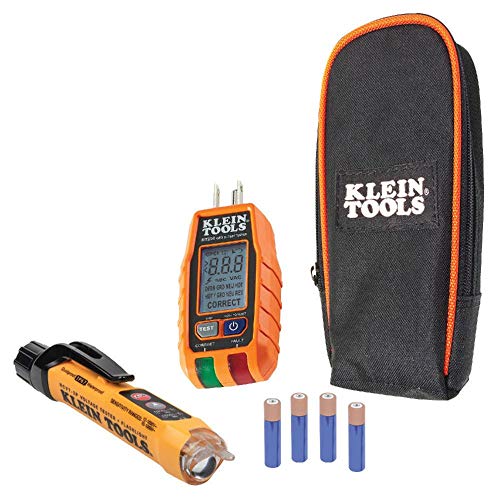 | Klein RT250KIT Tester Kit with NCV | All-in-One Kit | Check Price |
 | KAIWEETS Circuit Tracer and GFCI Tester | Breaker Finder Combo | Check Price |
 | KAIWEETS Complete Test Kit with NCV | Comprehensive Test Kit | Check Price |
Klein RT250 LCD GFCI Outlet Tester
Perfect for electricians and handy homeowners who want a simple, reliable GFCI and wiring tester with a clear LCD readout.
The RT250 shines with its easy-to-read LCD that shows wiring status and voltage at a glance, so you won’t have to decode tiny LEDs. It also performs GFCI trip tests and reports the result on-screen, which is handy when you need to check a bathroom or outdoor receptacle quickly — press the test, watch the display, and confirm the outlet is protecting as intended.
Build and ergonomics are thoughtful. The unit is compact, rugged, and easy to hold while you plug it in. For routine troubleshooting and safety checks on standard 120V outlets, the Klein RT250 is a practical, no-nonsense choice that speeds up inspections and reduces guesswork.
Pros:
- Clear LCD makes wiring faults and voltage easy to read.
- Built-in GFCI trip test simplifies safety verification.
- Compact, durable design for jobsite use.
- Fast, intuitive operation for quick troubleshooting.
Cons:
- LCD can be tight to view in cramped receptacles or awkward angles.
- Focused on standard 120V outlets — not for high-voltage or advanced electrical diagnostics.
- No dedicated storage case included.
KAIWEETS LCD GFCI Receptacle Tester
Perfect for DIYers and pro electricians who want a fast, reliable way to check GFCI outlets and common wiring faults.
The standout features are the clear LCD readout and the built-in GFCI trip test. The LCD gives explicit codes for hot/neutral/ground status so you don’t have to guess from tiny LEDs. The GFCI trip button lets you verify the breaker response on the spot—for example, quickly confirming a bathroom outlet actually trips a GFCI as required.
It’s also compact and user-friendly, with a rugged plastic housing that stands up to jobsite use. The plug-in form factor makes testing simple and fast, and the combination of clear feedback and durable build makes this tester a strong, cost-effective tool for routine electrical checks.
Pros:
- Easy-to-read LCD for clear wiring status
- Integrated GFCI trip test saves time on verification
- Compact, durable design for jobsite use
- Quick diagnostics reduce troubleshooting time
Cons:
- LCD can be small in dim lighting without a backlight
- Doesn’t log results or offer advanced reporting
- May not detect every complex wiring fault
Universal LCD GFCI Receptacle Tester
Perfect for electricians, DIYers, and homeowners who need a fast, clear way to diagnose GFCI and outlet wiring problems.
The standout feature is the bright LCD that displays wiring status and voltage readings in plain text and icons, so you don’t have to guess codes. It also includes a GFCI trip test function—simply plug it in and press the test to verify the outlet will actually trip, which is handy when checking bathroom or garage circuits.
The tester is compact and built from durable plastic with a protective shroud, so it survives jobsite use and fits in a pouch. It also offers an audible alert and an auto-off to save battery. For straightforward, reliable GFCI and outlet checks, this unit is a practical, user-friendly choice.
Pros:
- Clear backlit LCD with plain-text wiring and voltage readouts
- Built-in GFCI trip test for real-world verification
- Compact, durable design suitable for jobsite use
- Easy for both professionals and beginners to use
Cons:
- Not as feature-rich as advanced electrical analyzers
- Requires battery replacement over time
- Small screen can be harder to read at extreme angles
Fluke ST120+ GFCI Socket Tester
Perfect for electricians and serious DIYers, the Fluke ST120+ GFCI Socket Tester gives a fast, dependable way to check GFCI outlets and basic wiring with a clear LCD readout.
Its bright LCD displays voltage and wiring status at a glance, so you can spot open ground, reversed polarity, or no neutral quickly. The built-in GFCI test button lets you trip and verify a protector on the spot—use it to confirm a bathroom outlet trips correctly before you finish a job.
Fluke’s rugged construction and straightforward controls mean the tester stands up to jobsite use and stays simple to operate. Its compact size fits a pocket and the accurate readouts reduce guesswork, making it a strong choice when you want reliable, easy-to-interpret GFCI and outlet diagnostics.
Pros:
- Clear, backlit LCD with voltage and wiring indicators for quick diagnostics
- Built-in GFCI test button for on-the-spot verification
- Rugged, pocket-friendly design from a trusted brand
- Accurate readings that cut down troubleshooting time
Cons:
- Priced higher than basic LED-only testers
- No data logging or smartphone connectivity for record keeping
Wide-Range LCD GFCI Plug Tester
This Wide-Range LCD GFCI Plug Tester is perfect for electricians, property managers, and DIYers who want a quick, portable tool to verify outlet wiring and GFCI protection.
Its key features are a clear LCD that displays voltage and wiring status and a wide input range (about 110–240V) so it works on most household and light commercial circuits. For example, plug it into a bathroom receptacle to see the measured voltage and instantly know if the ground is open or the hot/neutral are reversed, then use the built‑in GFCI trip to confirm protection.
The tester also scores points for a rugged, compact housing and simple icon-based readouts that make jobsite use easy. Its combination of readable data, GFCI test capability, and portability makes it a strong choice for routine checks and troubleshooting around the home or on the job.
Pros:
- Wide voltage range for use on 110–240V circuits—good for varied jobs
- Clear LCD shows voltage and wiring status at a glance
- Built‑in GFCI trip function for quick verification of protection
- Compact, durable design suited to jobsite handling
Cons:
- LCD can be small and harder to read in bright sunlight
- Not a substitute for advanced diagnostic tools (no ground impedance/ leakage measurement)
- No protective carrying case included
Klein RT250KIT Tester Kit with NCV
Perfect for electricians and handy homeowners who want a fast, reliable way to check outlets and live wiring before they work. The Klein RT250KIT is built for on-the-job troubleshooting and quick safety checks around the house.
The kit’s standout features are the non-contact voltage (NCV) detector and the outlet wiring indicators. NCV lets you spot a live conductor without touching it — handy when hunting a hot wire behind a switch plate. The three-prong wiring lights and GFCI test/trip function give clear pass/fail feedback so you can confirm an outlet is safe to use, for example before plugging in a power tool.
It’s compact, rugged, and easy to carry in a pocket or tool bag. Bright LEDs and an audible tone make readings obvious in dim basements or busy job sites. For straightforward outlet and voltage safety checks, this kit is a strong, practical choice.
Pros:
- Includes NCV for non-contact live wire detection — safer and faster troubleshooting.
- Clear wiring indicators and GFCI test make outlet checks simple and reliable.
- Rugged, compact design that’s easy to carry on the job.
- Audible and visual feedback works well in noisy or low-light conditions.
Cons:
- No numeric LCD readout — it gives status rather than precise voltage values.
- Full functionality requires standard three-prong outlets; limited on older two-prong receptacles.
- Not a substitute for a full diagnostic meter for advanced testing.
KAIWEETS Circuit Tracer and GFCI Tester
Ideal for homeowners and pro technicians who want a compact tool to test GFCI outlets and trace live wires quickly and reliably.
This unit combines a clear LCD GFCI tester with a handheld circuit tracer. The LCD gives readable codes and voltage readings so you can spot open ground or reversed polarity at a glance. The tracer tone generator and probe help you locate the exact cable run behind walls — handy when you need to find the feed for a bathroom or replacement outlet.
The build feels solid and the backlit display and audible tones make field work easier. Batteries last through several jobs, and the simple controls reduce setup time. For anyone needing both diagnostic and tracing functions in one affordable tool, this is a strong, practical choice.
Pros:
- Combines GFCI tester and circuit tracer in one compact unit.
- Clear LCD with readable fault codes and voltage readout.
- Effective tone tracer for locating cables behind walls.
- Easy to use and durable for jobsite work.
Cons:
- Tracer range can weaken through heavy insulation or multiple studs.
- Probe sensitivity takes a short learning curve for precision tracing.
KAIWEETS Complete Test Kit with NCV
Perfect for electricians and handy homeowners who want a compact, all-in-one outlet tester with non-contact voltage (NCV) detection for routine troubleshooting.
The standout features are the clear LCD readout for voltage and wiring status and the built-in NCV sensor for quick live-wire checks. In practice, you can verify a GFCI outlet’s wiring and then use NCV to scan a faceplate before replacing it, saving time and reducing risk of accidental contact with live conductors.
It also feels solid and thoughtfully designed, with ergonomic controls and included accessories that make on-the-job testing easier. For anyone who needs a reliable, portable tester that covers basic to intermediate checks, this kit is a strong, budget-friendly choice.
Pros:
- Clear LCD makes fault reading fast and unambiguous.
- NCV adds a non-invasive safety check before working on circuits.
- Compact kit with useful accessories for common outlet tests.
- Good value for routine professional and DIY use.
Cons:
- Not as feature-rich as higher-end multifunction meters.
- LCD visibility can be limited in very bright light.
- Beginners may need a quick read of the manual to interpret some codes.
Buyer’s Guide: Key Factors to Consider
Accuracy & Test Coverage
Look for testers that check all common fault conditions: open ground, open neutral, open hot, hot/neutral reverse, hot/ground reverse, and a true GFCI trip test. Choose models with a calibrated GFCI trip feature (typically 5–6 mA for portable testers or 30 mA where required) and clear pass/fail readouts. For professional use, prioritize devices with certification and a stated measurement tolerance.
LCD Features & Usability
An LCD should show clear wiring diagrams, voltage readout, and test status. Prefer high-contrast displays with backlight and icons rather than cryptic LED patterns. Bonus features in 2025: touch controls, USB-C charging, firmware updates, or Bluetooth app logging for job records. Make sure the menu is intuitive—if you’ll use it on jobsites, wear gloves and bright sunlight visibility matter.
Safety, Durability & Certifications
Choose testers with safety ratings and third-party certifications (UL/ETL/CSA or relevant IEC standards) and an IP rating if you work in damp environments. Rugged housing, fused test leads, and clear overload protection keep you safe. For electricians, pick models designed for CAT III or IV environments with replaceable fuses and clear safety documentation.
Frequently Asked Questions
Q1: What’s the difference between a GFCI outlet tester and a full circuit analyzer?
A1: A GFCI outlet tester primarily checks outlet wiring and whether a GFCI will trip correctly; a full circuit analyzer measures additional parameters like load current, impedance, harmonics, and detailed voltage profiles. Use a tester for quick checks and a circuit analyzer for in-depth diagnostics.
Q2: Can I use a GFCI tester on 240V outlets or international sockets?
A2: Only if the tester explicitly supports the voltage and plug types. Many testers are designed for 120V (North America). If you need international or 240V compatibility, choose a model rated for those voltages and frequencies or use appropriate adapters per the manufacturer’s instructions.
Q3: How do I know the GFCI trip test is accurate?
A3: Look for testers that state the test current (e.g., 5 mA or 30 mA) and provide calibration or traceability info. For critical work, intermittently verify the tester against a certified reference instrument or have it recalibrated per the manufacturer’s schedule.
Q4: Are LCD testers battery-powered, and what about rechargeability?
A4: Most LCD testers use replaceable batteries (AA/AAA) or internal rechargeable packs. By 2025 many models offer USB-C charging—prefer rechargeable units with battery-level indicators to avoid surprises on the job.
Q5: Can these testers damage sensitive electronics while testing?
A5: Standard GFCI trip tests inject a small, controlled leakage current; they are designed not to harm typical electronics. However, avoid testing on powered medical equipment, sensitive data centers, or devices with unique grounding without manufacturer guidance.
Q6: How often should I replace or recalibrate my tester?
A6: For hobbyists, inspect annually and replace batteries as needed. Professionals should follow the manufacturer’s calibration interval—commonly every 12–24 months—or sooner if the device is dropped or shows inconsistent readings.
Final Verdict: Which One Should You Buy?
For most homeowners and DIYers, pick the top-rated all‑round LCD GFCI tester in this roundup for its clear wiring display, reliable trip test, and rechargeable battery. Electricians should invest in the pro-grade model with broader test coverage, CAT-rated safety, and logging or app features. Budget buyers can still get dependable results from a compact, certified LCD tester with basic GFCI and wiring checks.