Dead starts, dim headlights, or a mystery battery light? Guessing wastes time and money. A good 12V battery tester gives instant answers on battery health, cranking performance, and alternator output—before you get stranded.
We researched the best 12V testers for cars and trucks, from simple voltage readers to pro-grade load testers and multi-voltage analyzers. Below is a quick comparison to help you choose by use case and budget. Scan the table, check prices, and pick the tool that fits your needs.
| Product Image | Product Name | Best For | Check Price |
|---|---|---|---|
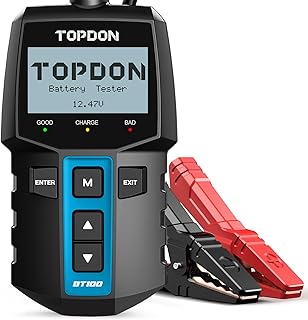 | TOPDON BT100 12V Battery Load Tester | Fast 12V checks | Check Price |
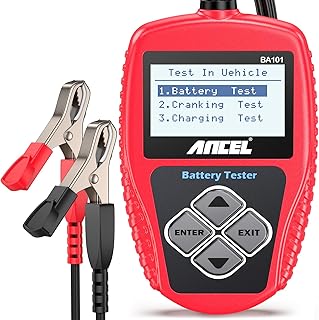 | ANCEL BA101 12V Alternator Battery Tester | Easy for beginners | Check Price |
 | KONNWEI KW208 12V Starter Alternator Tester | All-around value | Check Price |
 | Schumacher 100A 6V/12V Battery Load Tester | Traditional load testing | Check Price |
 | MOTOPOWER MP0515A 12V CCA Battery Tester | Budget 12V tester | Check Price |
 | VDIAGTOOL BT500 6V/12V/24V 3000 CCA Tester | Multi-voltage up to 24V | Check Price |
 | Acclope BT60 Pro Cloud-Print Battery Tester | Cloud print reports | Check Price |
 | MOTOPOWER MP0514A 12V Digital Voltmeter Tester | Quick voltage checks | Check Price |
 | VDIAGTOOL BT300 6V/12V Battery Load Tester | Compact 6V/12V | Check Price |
 | SAZDOLN BT900 6V/8V/12V Battery Analyzer | For classic cars | Check Price |
In-Depth Product Reviews
TOPDON BT100 12V Battery Load Tester
Perfect for DIYers, roadside helpers, and used-car shoppers who want fast, reliable answers about a 12V battery and the car’s starting/charging system.
The BT100 checks battery health, state of charge, internal resistance, and actual cranking amps, then gives a clear verdict (Good/Recharge/Replace). It also runs cranking and charging tests to spot a weak starter or alternator. It supports flooded, AGM, GEL, and EFB batteries across a wide CCA range, so you can test anything from small sedans to SUVs. Example: a battery rated 650 CCA showing 430 CCA with “Replace” saves you from guessing and prevents a no-start later.
The backlit screen is easy to read in a garage or driveway, and it powers on from the battery—no internal batteries to manage. Sturdy clamps and straightforward menus make it quick to use, even for beginners. Add in reverse-polarity protection and a compact build, and it’s a strong, budget-friendly pick for routine checks.
Pros:
- 👍 Clear health verdicts with actual CCA, SOC, and internal resistance readings
- 👍 Tests cranking and charging systems to diagnose starter/alternator issues
- 👍 Works with flooded, AGM, GEL, and EFB 12V batteries
- 👍 Backlit display and simple menus for quick results
- 👍 Reverse-polarity protection and solid clamps for safe use
Cons:
- 👎 12V only—won’t test 24V systems
- 👎 No Bluetooth/app or printout for storing results
- 👎 Not designed for lithium (LiFePO4) batteries
ANCEL BA101 12V Alternator Battery Tester
The ANCEL BA101 is perfect for DIYers, small shops, and used-car buyers who need quick, reliable checks of 12V batteries and alternators.
Its standout trick is combined battery and charging-system testing. Clip it on, enter the battery’s CCA, and in seconds you see state of health, internal resistance, and cranking performance. Start the engine, and it evaluates alternator output and ripple. You’ll know if a dim headlight is a weak battery or a failing alternator. It’s powered through the clamps, so there’s no internal battery to charge. Just grab it and go.
The backlit screen and simple four-button layout are easy to read in a garage. It supports common standards (CCA, DIN, EN, JIS) and works with flooded, AGM, and gel 12V batteries. Reverse-polarity protection keeps testing safe. With quick, repeatable results and a pocketable build, the BA101 is a strong value pick for everyday diagnostics.
Pros:
- 👍 Tests battery, starter, and alternator in one—saves time and guesswork.
- 👍 Fast, clear results with SOH/SOC, voltage, resistance, and CCA analysis.
- 👍 Backlit display and simple interface are beginner-friendly.
- 👍 Works with most 12V lead-acid types and rating standards.
- 👍 Powered by the vehicle battery; no charging or AAAs required.
Cons:
- 👎 Tethered cable can feel short in some engine bays.
- 👎 No Bluetooth/app or data logging; basic readout only.
- 👎 12V only—won’t test 24V systems or lithium batteries.
- 👎 Needs some voltage at the clamps to power up.
KONNWEI KW208 12V Starter Alternator Tester
Perfect for DIYers who want a fast, no‑nonsense way to check 12V batteries, starters, and alternators at home or curbside.
The KW208 combines battery health, cranking, and charging tests in one tool, so you can diagnose issues in minutes. It reads SOH/SOC, CCA, and internal resistance, then shows cranking voltage and alternator output under load. Example: if your engine cranks slowly on a cold morning, you’ll see the voltage drop below spec—telling you whether the battery is weak or the alternator isn’t replenishing it.
The backlit screen and simple menus make it easy to use, and the reverse‑polarity protection and sturdy clamps inspire confidence. It supports flooded, AGM, EFB, and gel batteries and works on or off the vehicle, so you can test before installing. For the price, it’s a reliable, glove‑box‑friendly pick that punches above its weight.
Pros:
- 👍 All‑in‑one tests: battery, starter, and alternator in minutes.
- 👍 Clear SOH/SOC, CCA, and resistance readings for confident decisions.
- 👍 Works with multiple 12V battery types (flooded, AGM, EFB, gel), in or out of vehicle.
- 👍 Backlit screen and solid clamps; plug‑and‑play with polarity protection.
Cons:
- 👎 12V systems only; not for 24V or lithium batteries.
- 👎 No data export or app connectivity.
- 👎 Conductance tester, not a true carbon‑pile load test.
Schumacher 100A 6V/12V Battery Load Tester
Perfect for DIYers and pros who want a straightforward, true-load check on 6V and 12V batteries. It gives quick, confidence-building answers before you spend money on a replacement.
The 100A load simulates real starter draw, so weak cells show up fast, not hidden behind no-load voltage. Clamp it on, hit the switch, and read the analog dial—results arrive in about ten seconds. Example: if your car cranks slowly on cold mornings, a brief load test will confirm whether the battery is the culprit.
The ventilated steel case and heavy-duty clamps feel shop-ready, and the simple scale is easy to read at a glance. You can also spot basic charging issues by checking voltage with the engine running. If you value durability and no-nonsense diagnostics, this tester is a dependable, budget-friendly choice for garages and weekend wrenchers alike.
Pros:
- 👍 True 100A load exposes weak batteries under cranking conditions
- 👍 Works with both 6V and 12V systems—cars, garden tractors, ATVs, and small boats
- 👍 Fast, clamp-and-test operation with an easy-to-read analog meter
- 👍 Rugged, ventilated steel body and heavy-duty clamps built for frequent use
Cons:
- 👎 Analog gauge lacks backlight and digital precision
- 👎 Gets hot; you need short tests and cool-down periods
- 👎 Bulkier than pocket conductance testers and not glovebox-friendly
MOTOPOWER MP0515A 12V CCA Battery Tester
Perfect for DIYers and weekend mechanics who want a fast, affordable way to check 12V batteries on cars, motorcycles, and small boats.
The MP0515A reads CCA and voltage quickly, then shows overall health and charge status in plain language. You just enter the battery’s rating, clip the clamps, and you get results in seconds. For example, before a road trip, you can confirm your battery is “Good” and avoid a surprise jump-start in a parking lot.
I like the practical design touches: a backlit screen that’s easy to read in a dim garage, sturdy clamps with reverse-polarity protection, and no internal battery to charge—it powers from the battery you’re testing. It also works with common lead-acid types, including AGM and gel. If you want fuss-free diagnostics without paying pro-shop prices, this is a strong choice.
Pros:
- 👍 Quick CCA and voltage analysis with clear “Good/Replace” guidance.
- 👍 No internal battery required—just clip and test.
- 👍 Backlit display and simple menu for easy use anywhere.
- 👍 Solid clamps and reverse-polarity protection for safer testing.
- 👍 Works with flooded, AGM, and gel 12V batteries across many vehicles.
Cons:
- 👎 Leads could be longer for hard-to-reach batteries.
- 👎 Screen is small and basic compared with pricier models.
- 👎 12V only—won’t test 24V systems or lithium batteries.
VDIAGTOOL BT500 6V/12V/24V 3000 CCA Tester
Perfect for DIYers and fleet techs who need one rugged tool to test 6V, 12V, and 24V batteries and quickly tell battery issues from charging problems.
The headline feature is its huge 3000 CCA range and multi-system coverage. It handles lawn mowers, cars, RVs, and heavy‑duty trucks with equal confidence. You get clear state of health, state of charge, internal resistance, and voltage, plus starter and alternator tests. Example: if a diesel cranks slowly, the BT500 will show whether the battery’s CCA is fading or if the alternator ripple is the real culprit—so you replace the right part the first time.
The design is shop-friendly: a bright, backlit screen, simple menus, and sturdy, well-insulated clamps. It supports common battery types (flooded, AGM, EFB, gel) and standards like CCA/EN/DIN/SAE. Reverse-polarity protection keeps you safe, and it powers from the battery—no charging needed. Add its durable housing and long leads, and you’ve got a dependable tester that earns its keep in any garage.
Pros:
- 👍 Covers 6V/12V/24V systems and up to 3000 CCA for cars to heavy trucks
- 👍 Full diagnostics: SOH/SOC, cranking, charging, and ripple tests
- 👍 Clear, backlit display and simple menus for quick results
- 👍 Works with flooded, AGM, EFB, and gel batteries across multiple standards
- 👍 Robust clamps and reverse-polarity protection for safe, stable connections
Cons:
- 👎 Larger and heavier than pocket-sized 12V-only testers
- 👎 Menu terms can have a brief learning curve for first-time users
- 👎 No app connectivity or built-in printer for saving reports
Acclope BT60 Pro Cloud-Print Battery Tester
Perfect for DIYers and mobile mechanics who want fast, pro-level battery diagnostics with easy-to-share results.
The standout feature is its Cloud-Print reporting. Run a test, generate a clean report in the app, and send it to a client or save it for your records—no laptop needed. It also checks the whole system, not just the battery. You’ll see clear pass/fail guidance for battery health, cranking performance, and charging status. Example: if a car cranks slow, the BT60 Pro will tell you whether it’s a weak battery or an alternator issue, so you fix the right thing first.
Build quality is solid, with grippy, well-sprung clamps and reverse-polarity protection for safety. The interface is straightforward, and the backlit display stays readable in a dim garage. It supports common 12V lead-acid types, including AGM, EFB, gel, and flooded, making it versatile across cars, SUVs, and small trucks. If you want accurate testing plus professional-looking reports, this is a strong pick.
Pros:
- 👍 Cloud-Print reports are quick to share with customers or keep on file.
- 👍 Tests battery, cranking, and charging systems for full-picture diagnosis.
- 👍 Works with AGM, EFB, gel, and flooded 12V batteries.
- 👍 Clear, backlit display and simple menus speed up testing.
- 👍 Robust clamps and reverse-polarity protection add safety and reliability.
Cons:
- 👎 Cloud features require using the companion app and an account.
- 👎 Designed for 12V systems only, not heavy-duty 24V setups.
- 👎 Leads could be longer for easier reach in cramped engine bays.
MOTOPOWER MP0514A 12V Digital Voltmeter Tester
The MOTOPOWER MP0514A is perfect for DIY drivers, commuters, and weekend mechanics who want a quick, reliable snapshot of a 12V battery and charging system without spending much or learning complex tools.
Clip the alligator leads on and you get an instant digital voltage reading, no batteries or setup needed. It also checks the charging system while the engine is running, so you’ll know if your alternator is doing its job. Example: 12.6V resting is healthy; 13.8–14.7V running means the charge circuit’s fine.
The compact, durable housing and protected circuitry handle garage use, and reverse‑polarity safeguards keep you from damaging anything during hookups. The cable length is handy under the hood, and the display stays easy to read. For quick diagnostics at a bargain price, it’s a smart pick for glovebox or toolbox, and it works across cars, bikes, and boats.
Pros:
- 👍 Instant clip‑and‑read voltage; no internal batteries required
- 👍 Checks alternator/charging system while the engine runs
- 👍 Clear, easy‑to‑read digital display
- 👍 Compact, durable, and reverse‑polarity protected
- 👍 Excellent value for quick diagnostics
Cons:
- 👎 Not a full load/CCA tester; no state‑of‑health percentage
- 👎 Leads may feel short in larger engine bays
- 👎 Can be harder to read in direct sunlight
VDIAGTOOL BT300 6V/12V Battery Load Tester
The VDIAGTOOL BT300 is perfect for DIYers, car enthusiasts, and small-shop techs who want quick, trustworthy answers on 6V/12V lead-acid batteries.
Its standout trick is combining a true battery load test with starter and alternator checks in one handheld tool. You clip it on, choose battery type and rating, and it returns health, charge, internal resistance, and cranking/charging results in minutes. In practice, that means you can spot a weak battery and a failing alternator on the same visit. Example: it flags a battery at 62% health and shows low charging voltage, telling you it’s not just the battery—it’s the alternator, too.
Build quality is solid, with a grippy body, backlit screen, and reverse-polarity protection that keeps mistakes from becoming expensive. The clamps bite well, and the leads are long enough to test comfortably under the hood. It supports common types like Flooded, AGM, EFB, and Gel, making it a flexible shop companion and a strong value pick in this category.
Pros:
- 👍 Combines load, cranking, and charging tests for full-system diagnostics.
- 👍 Works with 6V/12V Flooded, AGM, EFB, and Gel batteries.
- 👍 Clear results (SOH, SOC, CCA, internal resistance) simplify decisions.
- 👍 Backlit display and intuitive menu make it easy to use anywhere.
- 👍 Durable housing, solid clamps, and protective features.
Cons:
- 👎 Not compatible with lithium batteries.
- 👎 Small screen and no built-in printing or app export.
- 👎 You need the battery’s rating (e.g., CCA) for best accuracy.
SAZDOLN BT900 6V/8V/12V Battery Analyzer
The SAZDOLN BT900 is perfect for DIYers, fleet managers, and small-shop techs who need one tool to test cars, motorcycles, boats, and even 8V classic setups.
Its 6V/8V/12V coverage and cranking/charging system tests turn guesses into quick answers. Choose the battery type (AGM, flooded, GEL, EFB), enter the rating, and it shows SOC, SOH, CCA, and internal resistance in seconds. Example: your truck won’t start—one clip-on test shows a weak 12V AGM, then a running test flags low alternator output.
The sturdy housing, backlit screen, and reverse-polarity protection make it garage-proof, and it powers from the battery—no charging. Menus are simple and results repeatable, so you can confidently recharge, replace, or send it out. For the price, it’s a versatile 12V tester that also covers 6V and 8V jobs.
Pros:
- 👍 6V/8V/12V support covers cars, powersports, boats, and classic 8V systems.
- 👍 Tests battery, starter, and charging systems for end-to-end diagnosis.
- 👍 Clear readouts (SOC/SOH, CCA, resistance) deliver actionable answers fast.
- 👍 Compatible with AGM, EFB, Gel, and flooded lead-acid batteries.
Cons:
- 👎 No Bluetooth/app or PC logging for long-term tracking.
- 👎 Leads are on the short side for hard-to-reach batteries.
- 👎 Not designed for lithium (LiFePO4) batteries.
Buyer’s Guide: 3 Key Factors to Consider
Compatibility and Test Method
Make sure the tester supports the battery types you use: Flooded, AGM, EFB (start‑stop), Gel, and LiFePO4. Look for modern conductance testing for quick, safe checks, plus cranking/charging system tests for a full picture. If you maintain lithium (LiFePO4), confirm the tester has a dedicated mode to avoid inaccurate results.
Accuracy, Range, and Reporting
Choose a tester with a CCA range that covers your vehicles (typically 100–1200 CCA) and supports multiple standards (CCA, CA, EN, DIN, IEC). A clear pass/fail with percentage health and state-of-charge helps you decide quickly. Extras like alternator ripple analysis and data export (print/Bluetooth app) are worth it if you track fleets or diagnose intermittents.
Ease of Use and Build Quality
Prioritize a bright, outdoor‑readable screen, simple menus, and long, flexible leads. Solid copper clamps with strong spring tension improve contact on corroded posts. For shop use, pick a rugged body with replaceable leads and a fused design; for glovebox use, go compact and self‑powered so it runs off the battery under test.
Frequently Asked Questions
Q1: Do I need to remove the battery to test it?
A1: Usually not. Most 12V conductance testers are designed for in‑vehicle testing. Just turn off accessories, connect clamps to clean terminals, and follow on‑screen prompts. Only remove the battery if the manufacturer specifies or if access is too limited for a safe connection.
Q2: What’s the difference between a load tester and a conductance tester?
A2: Load testers apply a heavy current to simulate starting; they’re simple but can stress weak batteries. Conductance testers analyze internal resistance to estimate health and CCA without large loads, offering faster, safer, and often more informative results, plus charging/starting system checks.
Q3: Can a tester diagnose my alternator and starter too?
A3: Yes—many 12V testers include cranking and charging tests. They monitor voltage drop during start to spot weak starters/cables and check charging voltage and ripple to identify alternator or diode issues. Look for models with “Start/Charge” or “Cranking/Charging” modes.
Q4: Will a tester work on a completely dead battery?
A4: If voltage is extremely low (often below ~7–9V), many testers can’t run a valid test. In that case, charge the battery to at least a minimal voltage and retest. Some advanced units have a “weak/low-voltage” mode, but a short charge still improves accuracy.
Q5: Are results accurate in cold weather?
A5: Cold temperatures reduce available capacity and can skew readings. Better testers compensate for temperature or allow you to input ambient temp. For the most reliable results, test near room temperature or interpret cold‑weather readings conservatively.
Q6: Is it safe to use on LiFePO4 batteries?
A6: Yes, if the tester has a LiFePO4 mode. Lithium chemistry behaves differently from lead‑acid, so you need the correct algorithm. Also ensure the battery’s BMS is awake (briefly turn on a load) before testing to avoid “no reading” errors.
Final Verdict: Which One Should You Buy?
If you want the simplest, most reliable choice for everyday cars, go with our Best Overall—fast, accurate conductance testing with start/charge diagnostics. Weekend DIYers or roadside kits should pick the Budget option for basic health checks. Pros and fleet managers will appreciate the Pro pick’s data logging, ripple analysis, and rugged clamps for all‑day diagnostics.