Ever tried to charge your laptop, run a mini-fridge, or plug in tools from your car and paused, wondering: are car power inverters safe? With so many models and mixed advice online, it’s easy to worry about overheating, battery drain, or electrical hazards when powering AC devices from your vehicle.
This guide answers that question clearly and gives practical safety tips for real-world use. Below you’ll also find a quick comparison table of top inverters so you can pick a reliable model that fits your needs—whether you want fast USB-C charging, high-wattage power, or a budget-friendly option for road trips.
| Product Image | Product Name | Best For | Check Price |
|---|---|---|---|
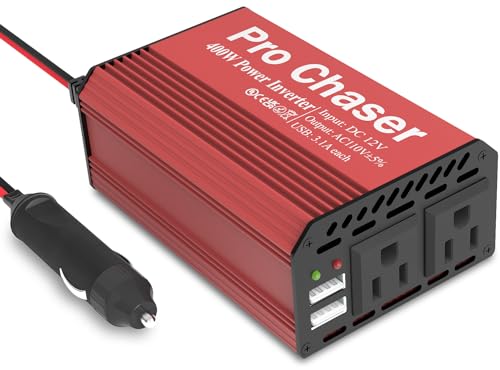 | Pro Chaser 400W Dual-Outlet Inverter | For Heavy-Duty Use | Check Price |
 | 200W PD Fast-Charge Car Inverter | Fast USB-C Charging | Check Price |
 | 300W LED Display Fast-Charge Inverter | Laptop Charging | Check Price |
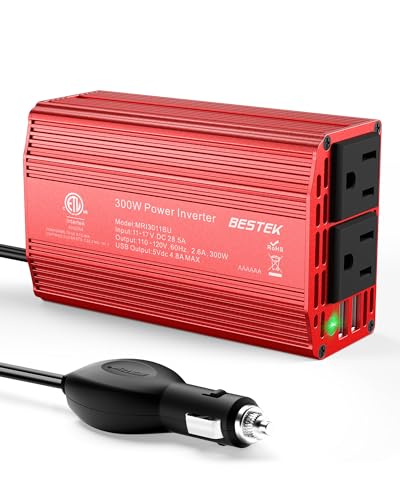 | BESTEK 300W Aluminum Housing Inverter | Road Trip Essential | Check Price |
 | BESTEK 300W USB-C QC3.0 Inverter | Everyday Versatility | Check Price |
 | FSATBTNE 400W PD & QC Inverter | High-Power Devices | Check Price |
 | BESTEK 300W Dual Outlet Inverter | Dual Outlet Power | Check Price |
 | Ampeak 100W Dual USB Inverter | Best Budget Option | Check Price |
Pro Chaser 400W Dual-Outlet Inverter
Perfect for road trippers, campers, and commuters who need reliable power for laptops, phone chargers, and small appliances on the go.
The Pro Chaser delivers 400W of usable power through two AC outlets, so you can run two devices at once. That means you can plug in a laptop and a phone charger during a pit stop, or run a small travel kettle for a quick cup of coffee without juggling cords.
It also packs essential safety protections like overload, short-circuit, and overheat shutdowns in a compact, sturdy housing. The unit’s size makes it easy to stow in a glove box or trunk, and the protections give peace of mind when charging expensive gear. Overall, it’s a solid choice for light-to-moderate in-car power needs.
Pros:
- Enough continuous power for laptops and small appliances.
- Dual AC outlets let you run two devices at once.
- Built-in safety features protect your devices.
- Compact, durable design for easy storage and travel.
Cons:
- Not suitable for high-draw appliances or power tools.
- Best for short-term or intermittent use rather than continuous heavy loads.
- May need good ventilation during extended use.
200W PD Fast-Charge Car Inverter
Perfect for road trippers, remote workers, and anyone who needs reliable power for laptops, cameras, or small appliances while on the move.
This inverter delivers a 200W continuous AC outlet plus a USB-C Power Delivery port for fast charging. In practice that means you can run a 13-inch laptop and fast-charge a phone at the same time — for example, editing photos between stops while your phone tops up quickly. The stable output and built-in surge protection help keep sensitive gear safe during use.
It also includes overload, overheat, and short-circuit protection, so you get peace of mind on long drives. The compact metal housing and simple plug-and-play design make it easy to store and use. For anyone who needs dependable, portable car power without hauling bulky gear, this is a strong, practical choice.
Pros:
- Fast USB-C Power Delivery for rapid phone and laptop charging.
- 200W AC outlet supports common small devices and electronics.
- Built-in safety protections reduce risk to your gear.
- Compact, durable design that’s easy to store in a vehicle.
Cons:
- 200W limit won’t handle high-power appliances or tools.
- May get warm and the cooling fan can be noticeable under sustained load.
- Not suitable as a sole power source for long-term off-grid use.
300W LED Display Fast-Charge Inverter
Perfect for road trippers, weekend campers, and anyone who needs reliable power for phones, laptops, and small devices from their car.
This 300W inverter pairs a clear LED display with fast-charge USB ports. The display shows input voltage and output watts, so you can see battery draw at a glance. The fast-charge USB-C port quickly tops up phones and tablets. For example, you can run a laptop and boost a phone during a long stop without guessing about your car battery.
It also includes common safety protections like overload, short-circuit, and low-voltage shutdown. The compact metal case and active cooling fan help it stay cool during extended use. For light electronics and on-the-go charging, it’s a practical and user-friendly choice that balances power and safety.
Pros:
- LED display makes battery and power use easy to monitor.
- Fast-charge USB-C port charges modern devices quickly.
- Built-in safety protections protect your car and connected gear.
- Compact, sturdy design that’s easy to store and mount.
- Simple hookup—plugs straight into a 12V socket or battery clamps.
Cons:
- 300W limit means it won’t run heavy appliances like heaters or kettles.
- Cooling fan can be noticeable under high load.
- For long use, you’ll likely need the car engine running to avoid draining the battery.
BESTEK 300W Aluminum Housing Inverter
Perfect for road-trippers, remote workers, and anyone who needs dependable AC power from a car for laptops, small appliances, and phone charging.
The inverter delivers 300W continuous power through two AC outlets and extra USB ports, so you can run a laptop and charge a phone at the same time. Its built-in protections (overload, overheat, short-circuit, and low-voltage shutdown) keep devices safe; for example, it will cut out before your car battery drains or a surge fries your gear.
The aluminum housing helps dissipate heat and adds durability, while a compact design makes it easy to stow in a glove box or trunk. It’s simple to use and offers solid performance for everyday mobile power needs, making it a strong, budget-friendly choice for casual users.
Pros:
- Sturdy aluminum housing for better heat dissipation and durability
- Multiple outlets and USB ports let you power several devices at once
- Comprehensive safety protections to prevent damage and battery drain
- Compact, portable, and easy to install in a vehicle
Cons:
- Modified sine wave output may not suit very sensitive electronics
- Cooling fan can get audible under heavier loads
- Limited to small appliances—won’t run high-wattage devices like hair dryers
BESTEK 300W USB-C QC3.0 Inverter
Perfect for road-trippers and daily commuters who need reliable power for phones, laptops, and small appliances on the go.
The inverter packs a 300W continuous AC output with USB-C and QC3.0 USB-A fast-charging ports. That means you can power a laptop from the AC plug while charging a phone at high speed via USB-C. In practice, you can finish work on the road and top up your phone before you reach your destination.
Safety and build quality stand out. The unit includes overload, overheat, and short-circuit protection plus a compact, vented housing that helps cooling. For anyone who wants a balance of portability, fast charging, and built-in protections, this inverter is a solid, user-friendly choice.
Pros:
- Good balance of 300W AC power and fast USB-C/QC3.0 charging
- Two AC outlets let you run a laptop and small device at once
- Built-in safety protections for peace of mind
- Compact, travel-friendly design
Cons:
- 300W limit won’t run larger appliances like a hair dryer
- Cigarette-plug models can heat the socket during long use
- Cooling fan may be noticeable under heavy load
FSATBTNE 400W PD & QC Inverter
Perfect for road-trippers and remote workers who want reliable, fast charging for laptops and phones from their car.
The key draw is the 400W inverter output combined with USB-C Power Delivery (PD) and Quick Charge (QC) ports. In practice this means you can run a 60–100W laptop via PD while also fast-charging a smartphone over QC, without juggling adapters. That capability makes it handy for charging a MacBook or powering a small monitor during a long drive.
On top of that the unit feels well built and compact, with venting and safety protections that reduce risk of overload or short circuits. It’s not meant for heavy appliances, but for charging and powering smaller devices in-car it’s a strong, practical choice that balances power, speed, and safety.
Pros:
- Fast USB-C PD for laptops and tablets
- Quick Charge port for rapid phone top-ups
- 400W output covers most portable electronics
- Compact, vented design with built-in protections
Cons:
- Not suitable for high-watt appliances (space heaters, kettles)
- Can get warm and the fan may be noticeable under heavy load
- Extended use can drain a vehicle battery if engine is off
BESTEK 300W Dual Outlet Inverter
Ideal for road-trippers, commuters, and anyone who needs reliable low-wattage AC power in a car or RV.
Its core strength is a steady 300W continuous output with higher peak surge capacity, paired with two AC outlets and USB charging ports. That means you can charge a laptop and run a small device like a camera battery charger at the same time without swapping plugs—handy on long drives or remote work stops.
Build quality is compact and travel-friendly, with handy safety features such as overload and short-circuit protection and an active cooling fan. The simple plug-and-play setup (cigarette lighter or battery clamps) makes it user-friendly, so it’s a solid choice if you need dependable, portable power for everyday electronics.
Pros:
- Compact, lightweight design easy to store in a glove box or trunk
- Two AC outlets plus USB ports for simultaneous charging
- Built-in protections for safer operation in vehicles
- Good peak surge capacity for starting small appliances
Cons:
- 300W continuous limit won’t run high-power appliances like microwaves
- Cooling fan can run audibly under heavy load
Ampeak 100W Dual USB Inverter
Perfect for road trippers, weekend campers, and commuters who need a compact way to power small electronics from a car cigarette lighter.
The Ampeak 100W Dual USB Inverter offers a 100-watt AC outlet plus two USB ports, so you can run a laptop briefly and charge a phone and tablet at the same time. For example, you can finish a work call on a laptop while both passengers keep their phones topped up, without juggling adapters.
It’s small, lightweight, and built with overload and short-circuit protection to keep devices safe. The simple plug-and-play design clips into your 12V socket and stores easily in a glove box. For anyone who needs reliable, portable power for low-wattage gear, it’s a practical and affordable choice.
Pros:
- Compact and portable — easy to store in a car.
- Dual USB ports plus AC outlet for simultaneous charging.
- Built-in safety protections (overload/short-circuit/low-voltage).
- Simple plug-and-play setup—no tools required.
Cons:
- Limited to low-wattage devices; not for heaters or large appliances.
- Can drain car battery if used long with engine off.
- May produce minor noise under heavier loads.
Buyer’s Guide: Key Factors to Consider
Power rating and compatibility
Choose an inverter whose continuous wattage exceeds the combined draw of the devices you’ll run (add a 20–30% safety margin). Check peak/surge ratings for motorized loads. Match output type to your devices: pure sine wave for laptops, CPAPs, and modern electronics; modified sine is okay for simple chargers and incandescent lights.
Built‑in safety features and certifications
Prioritize inverters with overcurrent, overheat, short‑circuit, and low‑voltage cutoff protections. Look for UL/ETL or IEC certification and clear thermal management (fan + vents). These features reduce fire risk and protect both your car battery and connected devices.
Installation, connectors, and real‑world usability
Decide between cigarette‑lighter plug models (easy, up to ~150W) and hardwired or battery‑clamp installs for higher power. Check USB/PD ports, AC outlets, and mounting options. Read reviews for real efficiency and idle draw—efficiency affects battery drain and alternator load.
Frequently Asked Questions
Q1: Are car power inverters safe to use?
A1: Yes, when sized, installed, and used correctly. Choose units with safety protections and certifications, avoid overloading, and ensure proper ventilation to minimize fire and electrical risks.
Q2: Will a modified sine wave inverter damage my laptop or CPAP?
A2: Possibly. Sensitive or motor‑driven devices may run poorly or be damaged on modified sine wave inverters. Use a pure sine wave inverter for laptops, CPAPs, and other sensitive electronics.
Q3: How can I prevent draining my car battery?
A3: Select an inverter with low‑voltage cutoff, monitor battery state while running devices, avoid long use with engine off, and consider a dedicated deep‑cycle battery or second battery for heavy loads.
Q4: Can an inverter cause interference with my vehicle’s electronics?
A4: High‑quality inverters are designed to minimize EMI, but cheap models can interfere with radio, ECU, or sensors. Look for units with good reviews and EMI/RFI filtering or certification.
Q5: What size inverter do I need to power a small fridge or power tools?
A5: Check the fridge or tool’s starting (surge) and running wattage. Small fridges often need 400–800W peak; many power tools require 1,000W+. Pick an inverter with adequate continuous and surge capacity and use a properly rated battery/alternator.
Q6: Is installation difficult, and when should I hire a professional?
A6: Plug‑in models are simple; hardwiring high‑wattage inverters requires correct fusing, wiring gauge, and secure battery connections—hire a professional if you’re not comfortable with vehicle electrical systems.
Final Verdict: Which One Should You Buy?
For most buyers in 2025, a pure sine wave inverter with adequate continuous wattage, built‑in protections (overheat, overload, low‑voltage cutoff), and proper certifications is the safest choice. Choose a compact 300–600W pure sine model for travel and sensitive electronics, and a hardwired 1000–3000W unit for campers or work trucks—prioritize certification and battery management for reliable, safe use.