We reviewed the best automotive battery testers so you can pick with confidence. Whether you want a simple 12V check, multi-voltage coverage, or a pro-grade load tester, these top picks deliver accurate results fast. Let’s find the right tester for your ride and your budget.
| Product Image | Product Name | Best For | Check Price |
|---|---|---|---|
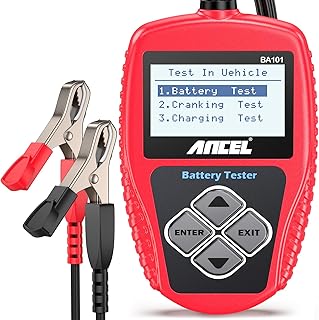 | ANCEL BA101 12V Battery Tester | Quick 12V checks | Check Price |
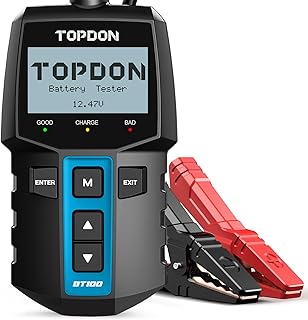 | TOPDON BT100 12V Battery Tester | Fast, easy results | Check Price |
 | KONNWEI KW208 Car Battery Analyzer | Best budget pick | Check Price |
 | MOTOPOWER MP0515A Car Load Tester | Simple everyday tests | Check Price |
 | Acclope BT60 Pro Multi-Voltage Tester | Pro workshop tool | Check Price |
 | Schumacher 100A Battery Load Tester | Heavy-duty loads | Check Price |
 | VDIAGTOOL BT500 6/12/24V Battery Tester | Multi-voltage coverage | Check Price |
 | MOTOPOWER MP0514A Digital Battery Voltmeter | Basic diagnostics | Check Price |
 | ANCEL BT521 Charger Tester Maintainer | Charge and maintain | Check Price |
 | POROMETISTO CBT01 Automotive Battery Checker | Deep-dive diagnostics | Check Price |
 | VDIAGTOOL BT300 Compact Battery Tester | Compact travel tester | Check Price |
In-Depth Product Reviews
ANCEL BA101 12V Battery Tester
Perfect for DIYers and used-car shoppers who want a fast, affordable way to check 12V batteries and charging systems without a mechanic.
The ANCEL BA101 reads voltage, CCA, and internal resistance, and it also tests cranking and charging performance. In practice, that means you can spot a weak battery or a failing alternator in minutes. Example: if your car hesitates to start, run a cranking test to see if low CCA is the culprit, then switch to the charging test to confirm the alternator is healthy.
It’s plug-and-play and powers itself from the battery, so there’s no need for extra batteries. You can test in or out of the vehicle, and reverse-polarity protection keeps you safe. The compact body and clear LCD make it easy to use in tight engine bays. For the price, it delivers reliable numbers and quick diagnostics, making it a strong budget pick.
Pros:
- 👍 Tests battery health and charging system for full-picture diagnostics.
- 👍 Works with flooded, AGM, and gel batteries across a wide CCA range.
- 👍 No separate power source needed; powers from the car battery.
- 👍 Fast results with clear on-screen guidance.
Cons:
- 👎 12V only; not suitable for 24V systems.
- 👎 Leads are a bit short for larger vehicles.
- 👎 No data logging, printing, or Bluetooth app support.
TOPDON BT100 12V Battery Tester
The TOPDON BT100 is perfect for DIY mechanics, rideshare drivers, and anyone who wants fast, reliable answers about a 12V car battery without a trip to the shop.
Its conductance-based test gives you clear numbers—voltage, internal resistance, SOC/SOH, and a CCA rating—so you know if the battery is healthy or due for replacement. It also runs starter and charging system checks, helping you tell a weak battery from a failing alternator. Example: after a slow crank, plug in the BT100, run the cranking test, and see if voltage dips too low during start or if the alternator isn’t keeping up once the engine is running.
Design-wise, it’s plug-and-play with reverse-polarity protection and testing in or out of the vehicle. The backlit screen is easy to read, and the clamps feel secure. Support for common 12V types (flooded, AGM, EFB, gel) makes it versatile and a strong value for everyday diagnostics.
Pros:
- 👍 Quick, accurate results with clear SOC/SOH, CCA, and resistance readouts
- 👍 Tests battery, starter (cranking), and alternator (charging) to pinpoint the real issue
- 👍 Works with multiple 12V battery types: flooded, AGM, EFB, and gel
- 👍 Safe, no-spark connection and reverse-polarity protection
- 👍 Backlit display and straightforward menus for easy use
Cons:
- 👎 Limited to 12V systems; not for 24V trucks or RVs
- 👎 No Bluetooth/app connectivity for saving reports
- 👎 Cable length is adequate but could be longer for larger engine bays
KONNWEI KW208 Car Battery Analyzer
Perfect for DIYers and used‑car buyers who want a fast, affordable way to check a 12V battery and charging system without a trip to the shop.
The headline feature is its conductance test: punch in the battery’s rated CCA and the KW208 reports real CCA, state of health, and state of charge. That means you can spot a “starts today, fails tomorrow” battery. Example: a battery showing 12.6V but only 55% SOH tells you to replace it before winter. It also runs cranking and charging tests, so you’ll know if a slow start is the battery, the starter, or an underperforming alternator.
It supports flooded, AGM (flat/spiral), EFB, and GEL batteries, works in or out of the vehicle, and has reverse‑polarity protection. The unit powers from the battery—no charging or internal cells to manage—and the clear, backlit screen keeps results easy to read. Overall, it’s a durable, great‑value pick for most 12V cars.
Pros:
- 👍 Quickly measures real CCA, SOH, and SOC to reveal hidden battery weakness.
- 👍 Cranking and charging tests help pinpoint starter or alternator issues.
- 👍 Works with flooded, AGM, EFB, and GEL batteries in or out of the car.
- 👍 Backlit screen and simple buttons; no internal battery to maintain.
- 👍 Strong value for routine home diagnostics.
Cons:
- 👎 No Bluetooth/app connectivity or data logging/printing.
- 👎 12V only—won’t test 24V systems or lithium batteries.
- 👎 Leads are on the short side for some engine bays.
MOTOPOWER MP0515A Car Load Tester
The MOTOPOWER MP0515A is perfect for DIYers and small shops who want a no‑nonsense way to see if a 12‑volt car battery can still crank.
Its standout feature is a true load test that puts real stress on the battery, not just a quick voltage reading. That matters because a battery can show 12.6V at rest and still fall on its face when you turn the key. With this tester, you clamp on, apply load for a few seconds, and watch the needle settle—if it drops into the weak zone, you know it’s time for a replacement. It’s fast, clear, and more trustworthy than simple plug‑in testers.
Build quality is a strong suit. The metal housing and chunky, insulated clamps feel tough, and the color‑coded gauge is easy to read in the garage. It’s designed for short test cycles with cool‑down in between, which helps longevity. For the price, it’s a straightforward, durable pick that delivers reliable answers in seconds.
Pros:
- 👍 Real load testing gives truer results than simple voltage checks.
- 👍 Fast, clear diagnosis—see weak batteries in seconds.
- 👍 Rugged metal body and heavy‑duty clamps inspire confidence.
- 👍 Easy to use with an intuitive, color‑coded gauge.
- 👍 Excellent value for DIYers and small garages.
Cons:
- 👎 Needs a short cool‑down between tests to prevent overheating.
- 👎 Analog gauge provides no digital readouts like CCA or internal resistance.
- 👎 Bulkier than pocket‑size electronic analyzers.
Acclope BT60 Pro Multi-Voltage Tester
The Acclope BT60 Pro Multi-Voltage Tester is perfect for DIYers and weekend mechanics who want a fast, reliable read on batteries and charging systems across cars, trucks, bikes, and ATVs.
Its big win is true multi-voltage support—6V, 12V, and 24V—plus tests for battery health, cranking, and charging. You see real numbers like voltage, CCA, SOC, and internal resistance, so you know if the battery is weak or the alternator is the culprit. Example: if your truck struggles to start, a quick cranking test will reveal if the battery dips too low under load or if the alternator isn’t replenishing properly.
Durability is solid, with chunky clamps and a backlit screen that’s easy to read in the garage. It’s powered by the battery being tested, has reverse-polarity protection, and the menu is straightforward for beginners. For the price, it’s a compact, no-nonsense tool that earns a spot in any glovebox or toolbox.
Pros:
- 👍 Works on 6V/12V/24V systems—great for cars, trucks, motorcycles, and equipment.
- 👍 Tests battery, cranking, and charging for full-system diagnostics.
- 👍 Clear readouts (CCA, SOC, resistance) help catch issues before they strand you.
- 👍 Backlit display, sturdy clamps, and reverse-polarity protection.
- 👍 Quick, plug-and-play operation—no separate power needed.
Cons:
- 👎 Not designed for lithium batteries or specialty chemistries.
- 👎 No app connectivity or printouts for record-keeping.
- 👎 Leads may feel short for larger vehicles if testing under the hood and cabin.
Schumacher 100A Battery Load Tester
This is perfect for DIY mechanics and small shops that want a quick, no-nonsense way to spot weak batteries and charging problems.
The 100A load simulates real cranking, so you see performance under stress, not just open-circuit voltage. Clip on the heavy-duty clamps, hold the switch for about 10 seconds, and watch the color-coded needle; if it dives below about 9.6V, it’s time to replace. It works on both 6V and 12V systems, so you can test a car in the morning and a lawn tractor after lunch.
A rugged steel case and insulated clamps stand up to shop abuse, and the built-in charging/starting checks make quick work of alternator and starter diagnostics. It heats up during use, but the cool-down period is short. If you prefer a simple, durable tool that delivers clear results fast, the Schumacher 100A is a strong choice for any garage.
Pros:
- 👍 True 100A load reveals weak batteries that a voltmeter misses.
- 👍 Works with 6V and 12V systems for cars, trucks, and lawn equipment.
- 👍 Color-coded analog meter gives instant, easy-to-read results.
- 👍 Rugged metal housing and heavy-duty clamps built for long life.
Cons:
- 👎 Analog dial lacks digital readouts or data storage.
- 👎 Load element gets hot; needs brief cooldown between tests.
- 👎 Short leads and basic design require you to be near the battery.
VDIAGTOOL BT500 6/12/24V Battery Tester
Perfect for DIYers, shop techs, and fleet owners who service mixed 6V, 12V, and 24V systems and want fast, reliable battery answers without pulling the battery from the vehicle.
The BT500 covers the essentials that matter: it tests battery health, cranking performance, and charging system status across cars, trucks, and equipment. Clip it on, select your battery type and rating, and you’ll see state of health, state of charge, and available CCA in seconds. For example, after a sluggish cold start, it can confirm whether the battery is weak or if the alternator isn’t keeping up—saving you from guesswork and unnecessary parts swaps.
Build quality is solid, with sturdy clamps and a clear, backlit screen that’s easy to read in dim garages. It supports common chemistries—AGM, EFB, gel, and flooded—and multiple rating standards, so you can test everything from a small lawn battery to a heavy‑duty truck battery. Add in reverse‑polarity protection, and you’ve got a dependable pick for regular maintenance or troubleshooting.
Pros:
- 👍 Works with 6V/12V/24V systems for broad car, truck, and equipment coverage.
- 👍 Runs battery, cranking, and charging tests in minutes with clear results.
- 👍 Supports AGM, EFB, gel, and flooded batteries and multiple rating standards (CCA, EN, DIN, etc.).
- 👍 Backlit display and sturdy clamps make it easy to use in the shop or driveway.
Cons:
- 👎 Data logging/report export is basic—you may need to note results manually.
- 👎 Screen text can feel small when wearing gloves.
- 👎 Leads are adequate but not extra‑long for large engine bays.
MOTOPOWER MP0514A Digital Battery Voltmeter
Perfect for DIY drivers who want a fast, no-fuss check of their 12V car, motorcycle, or boat battery without spending much.
The MP0514A gives an instant digital voltage readout and a simple charging-system check, so you’ll know if your alternator is doing its job. Clip it on, read the numbers, and go—no setup. For example, seeing 12.6V with the engine off and ~14.2V running tells you the battery is healthy and the alternator is charging correctly, so you can spot problems before a no-start.
It’s compact and durable, with reverse-polarity protection for safe hookups and no internal batteries to replace—it powers from the vehicle. The alligator clips feel secure, and the bright display is easy to read in a dim garage. If you want a straightforward, reliable tester to keep in the glovebox, this is a strong value pick.
Pros:
- 👍 Instant, easy-to-read digital voltage for quick checks
- 👍 Alternator/charging system test helps diagnose more than just the battery
- 👍 No internal batteries needed; always ready to use
- 👍 Compact, affordable, and glovebox-friendly
Cons:
- 👎 12V systems only; not for 24V or specialty batteries
- 👎 Not a load or conductance tester—won’t measure CCA
- 👎 Basic tool with no data logging or app connectivity
ANCEL BT521 Charger Tester Maintainer
The ANCEL BT521 is perfect for DIYers, roadside techs, and small shops that want quick, trustworthy answers about a 12-volt battery and charging system without hauling out bulky shop gear.
Its big strengths are accurate battery health readings (SOH, SOC, CCA, internal resistance) plus cranking and alternator tests that separate a weak battery from a failing starter or voltage regulator. In practice, if your car hesitates on cold mornings, the BT521 can show healthy CCA but low cranking voltage—pointing you to corroded cables or the starter instead of replacing a good battery. You can also verify charging voltage and stability after a jump or recharge, so you know the alternator is doing its job.
The design is practical: a clear, easy-to-read screen, straightforward menus, solid clamps, and built-in safety like reverse-polarity protection. A handy charger/maintainer test confirms your tender is actually topping off to spec, which helps protect AGM and EFB batteries. For everyday diagnostics and maintenance, it’s a confident, long-term pick.
Pros:
- 👍 Pinpoints battery vs starter vs alternator issues in minutes.
- 👍 Supports common lead-acid types (Flooded, AGM, EFB, Gel) and multiple rating standards.
- 👍 Works in or out of the vehicle without disconnecting the battery.
- 👍 Charger/maintainer test validates charging voltage and stability.
- 👍 Simple interface and readable screen with safe, protected clamps.
Cons:
- 👎 No Bluetooth/app or data export for saving reports.
- 👎 Terminology can feel technical for first-time users.
- 👎 Not a substitute for a pro load bank on complex electrical faults.
POROMETISTO CBT01 Automotive Battery Checker
The POROMETISTO CBT01 is perfect for DIY drivers, used-car shoppers, and small fleets who want fast, reliable battery checkups without paying a shop each time.
It delivers clear, actionable numbers—state of charge, cranking performance, and internal resistance—so you know whether to recharge or replace. It also checks the starting and charging systems to catch alternator issues. Example: before a weekend trip, a weak cranking score alerts you to swap the battery and avoid a tow.
Everyday usability stands out: the bright backlit display, simple buttons, and sturdy, non-slip clamps make testing easy in dim garages or tight bays. Reverse-polarity protection keeps hookups safe. Compact and durable, it supports common 12V battery types, making it a smart, affordable pick for most cars and light trucks.
Pros:
- 👍 Fast, clear health, cranking, and charging tests in one tool.
- 👍 Backlit screen and simple menus for easy reading in any light.
- 👍 Solid clamps with reverse-polarity protection for safer hookups.
- 👍 Supports the most common 12V battery types used in modern vehicles.
- 👍 Compact, budget-friendly, and easy to store in the glovebox.
Cons:
- 👎 Best for 12V systems; not designed for heavy-duty 24V trucks.
- 👎 No Bluetooth/app connectivity for saving or sharing test data.
- 👎 Cable length is average, which may feel short on larger vehicles.
VDIAGTOOL BT300 Compact Battery Tester
The VDIAGTOOL BT300 Compact Battery Tester is perfect for commuters, weekend wrenchers, and small garages that want quick, reliable answers on 12-volt battery health without a trip to the parts counter.
It checks battery health, cranking performance, and the charging system, so you see the full picture in seconds. Just clip on, select the battery standard, and test. For example, if your SUV cranks slowly on a cold morning, the BT300 can show low State of Health plus a weak cranking voltage drop, then confirm whether your alternator is topping off correctly—helping you decide if it’s time to replace the battery or just recharge it. It supports common types like AGM, EFB, gel, and flooded lead-acid.
The compact body, backlit screen, and simple menus make it easy to use in tight bays or at the curb. Solid clamps and reverse-polarity protection add confidence and safety. If you value speed, clarity, and portability, this tester is a strong pick.
Pros:
- 👍 Fast results with clear health, cranking, and charging readouts.
- 👍 Works with most 12V lead-acid types (AGM, EFB, gel, flooded).
- 👍 Backlit screen and simple menus are beginner-friendly.
- 👍 Reverse-polarity protection for safer testing.
- 👍 Compact and lightweight for glovebox or tool bag storage.
Cons:
- 👎 No Bluetooth app or data export for saving reports.
- 👎 Typically 12V only—not ideal for 24V trucks or marine banks.
- 👎 No built-in printer for shop-style paper reports.
Buyer’s Guide: 3 Key Factors to Consider
Accuracy and Compatibility
Match the tester to your battery types and vehicle voltage. Look for explicit support for AGM, EFB (start-stop), flooded, gel, and LiFePO4, plus 6V/12V (and 24V if you work on trucks). Ensure the CCA test range covers your battery’s rating and prefer units that list accuracy (±5% or better) and temperature compensation for cold-weather reliability.
Test Features That Matter
Beyond a simple CCA/SOH check, prioritize cranking and charging system tests to spot starter or alternator issues quickly. Useful extras for 2025 include Bluetooth app logging, firmware updates, and printable/exportable reports for maintenance history. If you’re a DIYer, keep it simple; shops and mobile techs benefit from data storage and report sharing.
Ease of Use and Build Quality
Choose a clear, backlit screen with plain-language prompts. Long, flexible leads (3–6 ft) and strong, copper-jaw clamps improve contact on crowded engine bays. Look for reverse-polarity protection, rugged overmolding, and replaceable leads/fuses. For app-based testers, prefer USB‑C charging and a stable Bluetooth connection with ongoing app support.
Frequently Asked Questions
Q1: Do I need to disconnect the battery to test it?
A1: For modern conductance testers, no—testing in-vehicle is standard. Just turn off accessories and allow the battery to rest a few minutes. Avoid testing while a charger is connected. Heavy load (carbon-pile) tests may require specific safety steps; follow the tool’s manual.
Q2: What do SOC, SOH, and CCA results actually mean?
A2: SOC (state of charge) is how full the battery is right now. SOH (state of health) estimates overall condition and remaining life. CCA (cold cranking amps) measures cold-start capability. A healthy battery typically shows SOH above ~70–80% and measured CCA close to its label rating.
Q3: Can a battery tester also diagnose the alternator and starter?
A3: Yes, many testers run cranking and charging tests. They record voltage drop during start (spotting weak starters or cables) and monitor alternator output and ripple at idle (catching under/overcharge or diode issues). Follow on-screen prompts to start the engine when instructed.
Q4: Will it work with AGM, EFB, gel, or lithium (LiFePO4) batteries?
A4: Only if the tester specifically supports those chemistries. Most mid-range models handle flooded, AGM, and EFB. Lithium requires explicit LiFePO4 support and often a “wake” function for BMS-protected packs. Always select the correct battery type in the menu before testing.
Q5: How accurate are budget battery testers?
A5: Many are reasonably accurate for DIY use if you ensure clean clamp contact, correct battery type selection, and a rested battery. Expect wider tolerances than pro units and fewer diagnostics. For consistent results, test at room temperature or choose models with temperature compensation.
Q6: How often should I test my battery?
A6: Check seasonally, before long trips, after a jump-start, or if cranking slows. Cold climates and short-trip driving warrant more frequent tests. Consider replacement when SOH drops below ~60% or measured CCA is 20–30% under the label and symptoms persist.
Final Verdict: Which One Should You Buy?
For most drivers, our Top Pick—a mid-priced conductance tester with AGM/EFB/LiFePO4 support and built-in cranking/charging diagnostics—hits the sweet spot of accuracy and ease. Budget-minded DIYers can choose the Best Value pick for occasional checks. Professionals and mobile techs should opt for the Pro Choice with Bluetooth reporting and firmware updates for shop-grade documentation.